Feeds:
Posts
Comments

Posts Tagged ‘Nicaragua’

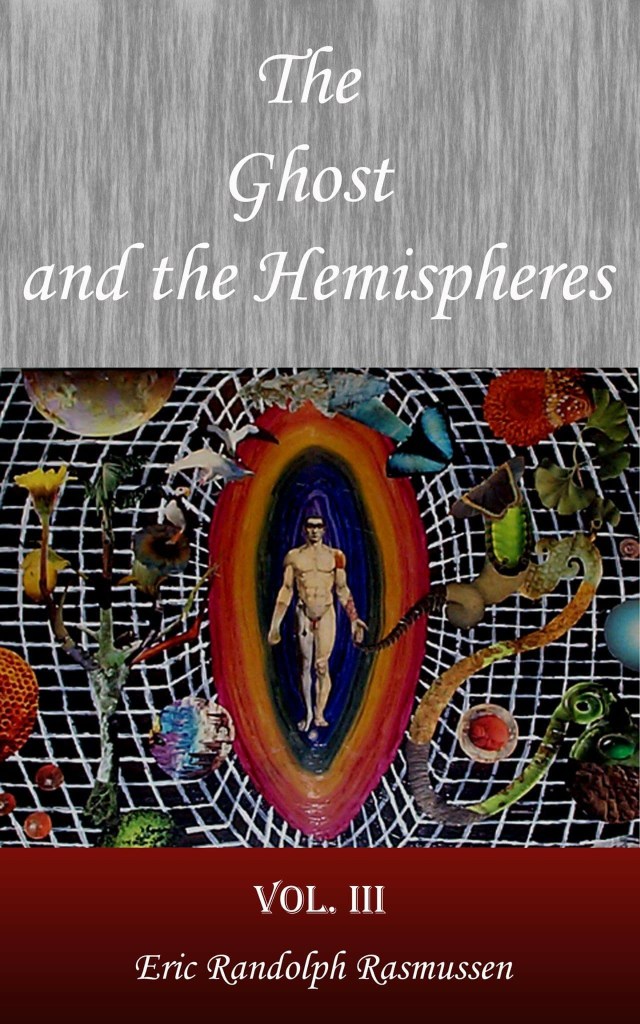
The third volume of my serio-comic epic novel The Ghost and the Hemispheres is now available as an e-book on Amazon.com. This was the last part of what was originally supposed to be one giant book. I noticed when I was still talking to agents that the size of the work put them off, so I have chopped the novel into what I hope are three more palatable bites.

The book is about the family of Octavio Albedo, a coffee baron who builds his empire in the early 20th century in northern Nicaragua. Octavio’s success helps build the town of Ascension, which over the years sees civil war, hurricanes and upheaval. The town is also beset by metaphysical problems: Its denizens start to think that they are living half in a dream, half in reality. Some are possessed by demons. Others see themselves caught in the conspiracy of capitalism.

In Volume 3, we follow four of Octavio’s great-grandchildren after they’ve fanned out into the world. One is a blood-thirsty, murderous Contra whose downfall comes when he finds his own capacity for goodness. Another grandchild is an inmate in a Honduran prison who’s got a secret formula for an amazing and possibly valuable street narcotic tattooed on his back. He becomes a highly prized target of several gangs. Next is a child prodigy painter in Miami who finds that the demons chasing her family have somehow inspired an awe-inspiring artistic talent in her.

Despite leaving their war-torn country, the various Albedos still find themselves plagued by various feelings of unreality, post-traumatic stress disorder and thirst for revenge—but an even deeper hunger for understanding of their world and what their madness really means.

Lest that all sound too austere, I should remind the reader that the novel is absurdist and funny. Here is the description on the Amazon site:

“A mountain town in Central America lives half in reality and half in dream. In Volume 3, the great-great grandchildren of Octavio Albedo fan out across the hemisphere trying to put their lives back together after a decade of war, but find that as spiritual creatures, their flesh is something best inhabited only part time.”

You can check out Volume 1 of The Ghost and the Hemispheres here.

You can check out Volume 2 here.

Again, the cover painting and design is by my friend Corey Brian Sanders.
Read Full Post »

Coming soon to Amazon … the last novel in my three-volume work, The Ghost and the Hemispheres.

(Cover design and painting by Corey Brian Sanders.)

Read Full Post »

Ghost and Hemispheres Cover Vol. 2The following is an excerpt from my novel, The Ghost and the Hemispheres, Volume 2, currently available as an e-book on Amazon.com.
As the students watched TV in the University Club, for the first time, Patroclus noticed that some 95% of the content came from the United States. There was Bewitched and I Dream of Jeannie, two television shows about wives possessed of magical powers, but rather than using the magic to free themselves from sexual slavery, penury and exploitation, the women instead served the monetary interests of their human slaveholder husbands. All they would have had to do was snap their fingers and their masters’ heads would have popped off like champagne corks, but instead they were alienated from that head-ripping-off potential by the awesome power of ideological hegemony. There was also Bonanza, a serial that humanized and normalized the rape of the American West by white expansion and subjugation (and let us not forget the dialogue wasn’t too bad).

When he sought reading material from the Balladares Pharmacy he found Time and Cosmo and Reader’s Digest and the Saturday Evening Post. He found pictures of a woman draped over a box of Pall Mall Gold 100’s, claiming that “You make out better at both ends.” A Lipton tea ad asking him if he was feeling “fagged.” Delco “Pleasurizer” shock absorbers for a better ride. “Husband pleasing” coffee. Sugar, which “turned into energy faster than any other food.” A car called a “Swinger.” White go-go boots. Half-nude bodies used to sell aspirin, women in suggestive siren poses meant to sell Pepsi. Pills for “tired blood” and women’s anxiety. He studied the cola and beer advertisements with deep post-structuralist curiosity.

The more girls buzzed about him, trying to confuse him, get his attention, diffuse his energy, raise his sap, get his blood up, dilute his prana, etc., the more Patroclus began to read from the books that Father Cuadra suggested: Hegel, Marx, Paulo Freire, Antonio Gramsci and Chairman Mao, and then finally, the book about the Crazy Little Army—Augusto César Sandino and his war in the Segovias. That war had taken place around Patroclus’s hometown. Yet nobody up there ever talked about Sandino. It was verboten. Like other young proto-revolutionaries, Patroclus also read Che Guevara and listened to the recordings of Radio Rebelde.

Every new Marxist walks about with a different set of eyes from the ones he had before. Everywhere Patroclus now saw things differently. One day he was out with Rosemarie and she asked him, “Should I get the chocolate-covered cherries or the chocolates with nothing in them?”

“Your choice is an illusion of freedom.”

She pinched his cheek.

“Cute.”

“I’m serious. This is meaningless.”

“What are you saying, exactly, when you say this is meaningless?”

“I want to see other girls.”

She started to cry and he stood listening with a stone face, knowing he must take responsibility for the pain he had caused her, but also willing to live with it for the sake of his new conviction, which required pain if it were to be genuine—his girlfriend’s pain if necessary.

All the material wealth he saw others chasing convinced Patroclus that he somehow did not really live in the world at all—or at least that he was living in more dimensions than he was seeing. Those advertisements, those nude bodies, those TV shows made him realize that his heart and body had been colonized. That every move he made was the act of a puppet dancing on a string. As he sat in the hot, dusty railroad colonial corridors of his dorm studying his medical books, dust motes flowed sideways and down and from off the floor—in a space without gravity. Every song, every coo of every silly coquette—everything was fabricated, he realized, to hide the truth of things. A woman once raised her finger to Patroclus to argue with him after she had shortchanged him at the pharmacy. He stopped listening to her and regarded her finger. As it rose, it also fell, and went sideways at the same time. Her voice was high and low at the same time. They were speaking a script somebody else had written for them. They had divided themselves to keep the owners in power.

His life was now seen in a kaleidoscope. And the more he was at odds with reality, the more he saw proof of his other self emerging.

Read Full Post »

Ghost and Hemispheres Cover Vol. 2I have just released my eighth novel, also known as Volume 2 of my seventh novel. The Ghost and the Hemispheres follows several generations of a Central American family as they experience a coffee boom, civil war, ethnic strive, a communist revolution and its aftermath. As the historical drama unfolds, everybody in the small town of Ascension is suffering from some sort of existential disorder that threatens their very concept of self, being and consciousness.

Volume 2 follows Patroclus Evers, scion of a once legendary family of coffee growers, as he leaves home and goes to the city to study medicine. Very quickly, he falls under the sway of radical students, poets and priests. Yet his dedication to social change is conflicted. From childhood, he has been haunted by feelings that there is another version of himself haunting the world. This person is not only an existential threat. Patroclus also fears that this other him might be enjoying life a lot more.

Volume 2 also follows his aunt Pepa through her own version of capitalist success and downfall, as she seeks the sexual validation of wealthy men, all to spurn the one man she couldn’t have.

The novel is now available in e-book form only, and only on Amazon.com. I hope to release a paperback version through Amazon’s platform next year.

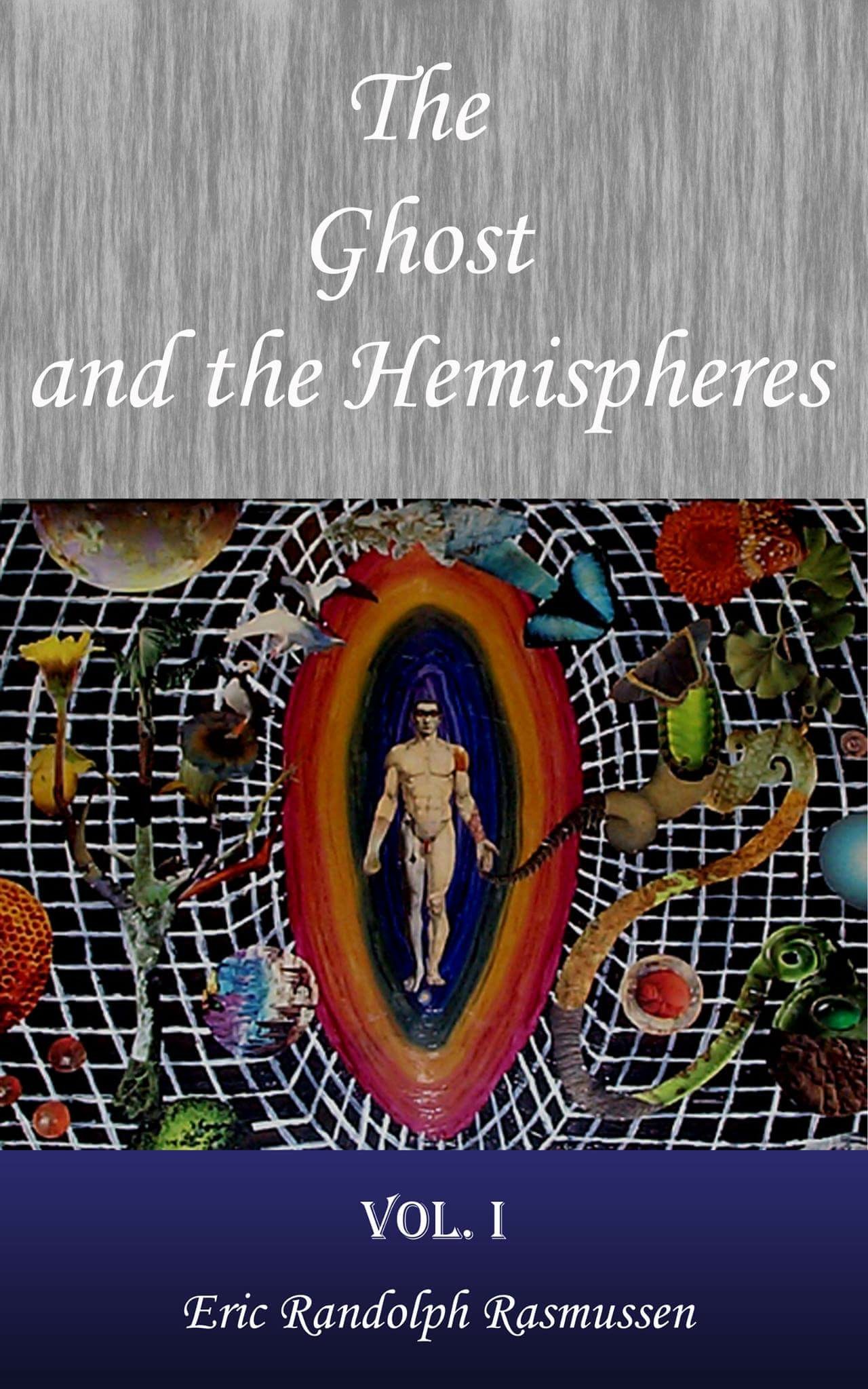
The cover painting and design are by my friend Corey Brian Sanders.

Read Full Post »

Ghost and Hemispheres Cover Vol. 1I am proud to announce that my seventh novel, The Ghost and the Hemispheres, Vol. 1, is now available as an e-book on Amazon. This is the first of three volumes, and my plan (hope) is to release the other two later this year and then to release them all in paperback form, maybe in 2021.

Superficially, this is a book about a Central American family coming to grips with change amid political upheaval and revolution. But it’s about a lot more than that. It’s also about science, chaos, narratology, the way consciousness is created, the way memory is stored, the way history is written. It is about the ways people pursue insanity to restore reality. It’s about the ways competing narratives come to define our history, and how truth by itself never seems to be good enough in that regard. Again, superficially, it’s about somebody else’s country, but it’s increasingly about my own.

I’ve been working on some version of this book for a really long time (don’t even ask). Finishing it feels a bit like a part of me is dying. Given our fraught political landscape, I’m a bit wary of how the book and its approach are going to be received, though. I worry it could get attention for the wrong reasons. So you, Beauty Is Imperfection readers, are probably going to be the first (and only) people to hear about it from me.

From the Amazon description:

A mountain town in Central America lives half in reality and half in dream. In Volume 1, Humberto Albedo, an adventurer and thrill-seeker, tries his hand at coffee farming in the early 20th century. His success leads to the formation of a town, and though he had run away from home to escape politics, the locals force him to become their mayor at gunpoint.

You can buy the book here. The book’s cover design and awesome paint were done by my friend Corey B. Sanders.

Read Full Post »