Feeds:
Posts
Comments

Romney, Severely

In a recent speech, Mitt Romney referred to himself as “severely conservative,” an idiom strange to many ears. What other words most often  follow “severely” (according to a Google search)?

–*Severely anemic

–*Severely atypical mole

–*Severely abnormal mole

–*Severely autistic

–*Severely bloated

–*Severely bruised toe

–*Severely bruised knee

–*Severely burned tongue

–*Severely chapped lips

–*Severely constipated

–*Severely cracked heels

–*Severely dry skin

–*Severely damaged hair

–*Severely depressed

–*Severely emotionally disturbed

–*Severely enlarged liver

–*Severely endangered species

–*Severely fatigued

–*Severely greasy hair

–*Severely high blood pressure

–*Severely hydrotreated heavy naphthenic oil

–*Severely herniated disc

–*Severely hypokinetic

–*Severely itchy scalp

–*Severely itchy skin

–*Severely itchy vulva

–*Severely impacted wisdom teeth

–*Severely jammed thumb

–*Severely jammed toe

–*Severely jet lagged

–*Severely knotted hair

–*Severely knotted muscle

–*Severely keratinized or ulcerated leukoplakia

–*Severely bruised knee

–*Severely low blood pressure

–*Severely low iron

–*Severely lupine

–*Severely lonely

–*Severely mentally ill

–*Severely matted dog

–*Severely matted hair

–*Severely neglected children

–*Severely nearsighted

–*Severely neutropenic

–*Severely overweight

–*Severely obese

–*Severely oily skin

–*Severely painful hemorrhoids

–*Severely painful periods

–*Severely painful gas

–*Severely pulled back muscle

–*Severely retroverted uterus

–*Severely red eyes

–*Severely retarded

–*Severely swollen tonsils

–*Severely sprained ankle

–*Severely stuffy nose

–*Severely tired

–*Severely tilted uterus

–*Severely underweight

–*Severely undervalued stocks

–*Severely underpaid

–*Severely visually impaired

–*Severely violent criminals

–*Severely wounded

–*Severely wrinkled hands

–*Severely worn dentition

What do our Valentine’s Day cards say?

–*You are my heart.

–*You are my soul.

–*You are my kidneys.

–*You are the person I have grown to love after I settled for you.

–*Love is like two souls joining. Especially in this community property state of Wisconsin.

–*Top ten reasons you are the only one for me, No. 7:  I don’t really need another public divorce, Love Ronald Perelman.

–*Like Philadelphia, I love you back, but unlike Philadelphia, I am not the meth capital of the U.S.

–*I’m sorry, I am giving the rose to Courtney.

–*I’m giving this Valentine’s Day card to you because my fifth grade teacher has ordered us to give cards to everybody else in the class, and thus I have fulfilled my legal obligation.

–*Valentine’s Day is not just a fake holiday invented by the greeting card industry. It’s also an extra reason for single people to feel awful.

–*I’m pretty sure that this Valentine’s Day card to you, my love, does not violate the restraining order, but if it does, please disregard.

–*Few people know what love really is. But I do. It’s part of the male posturing process among monkeys to dominate other males in order to propagate their DNA.

–*Monkey see, monkey do, roses are red and I love you.

–*Let’s drop the pretense. Let’s do it!

–*Whitney Houston’s premature death casts a pall over the proceedings, and reminds us not only that a huge hunk of talent has left us, but that large amorphous, clumping chunks of mediocrity have not.

–*Pink, Kanye West, Jay-Z and Betty White are conspicuous by their absence.

–*Cross-genre power duets are  kind of like the All Star Game. Why would we want to watch  talented people perform badly just to titillate 13-year-olds?

–*Oh, yeah. This is the Grammys.

–*Suze Orman says variable annuities are a scam. Sorry, I changed the channel there.

–*Chris Brown makes mediocrity his bitch, slaps that mediocrity and rides it like the mediocre whore she is. You could say he rules the mediocrity.

–*Adele wins for best pop vocal for “Someone Like You.” You might remember that as the song that was great 10,000 listenings ago.

–*L.L. Cool J says a prayer for Whitney Houston and tries to turn the Grammys from a sad event into a celebration of music. Bruno Mars turns it back into a sad occasion.

–*How in the hell does Steve Van Zandt zip around the world to tour with the E. Street Band, shoot the show “Lilyhammer,” and still have time to serve humanitarian causes? I guess you really do have a lot of time on your hands if you refuse to play “Sun City.”

–*Student loan debt cannot be discharged in bankruptcy, says Suze Orman. … Sorry, I really wasn’t into that Kelly Clarkson duet with what’s his name.

–*L.L. Cool J is so cool he can ably and confidently lead us through this emotionally confusing moment, when celebration meets loss, in a way that merits comparison with the modernist verse of a William Butler Yeats or the comforting, avuncular, telegenic presence of James Garner on “Eight Simple Rules …”

–*The ceremony of innocence is drowned. If we are lucky, it will drown out that Maroon 5 song about Mick Jagger.

–*Never underwrite anything, says Suze.

–*The Grammys has become expansive enough to include new categories including “Best Grunge,” “Best Gansta Rap,” “Best New Artist Who Is Likely To Die in a Drug Related Incident” and “The Best Bad Music.”

–*We can feel comfortable that even though Bruce Springsteen’s songs are starting to sound the same, at least his energetic performances are still giving him good cardio burn.

–*It’s probably good that Jay-Z is not here, since his bodyguards tend to keep people away from places it’s appropriate for them to be, whether it’s parents trying to get into the Lenox Hill neonatal care unit or Adele trying to get to her Grammy.

–*The Beach Boys’ reunion happens under a cloud–Whitney Houston’s death and Maroon 5’s continued existence.

–*You can’t argue with Adele’s outrageous success. And yet it keeps arguing with you, even after it has made its point, feeling the need to follow you into every grocery store, every Starbucks, every bank and even into your home and onto your television. This sore winner will not stop trying to win the argument.

–*”Beach Boys’ Marooned.” “Maroon 5 Beached.” The possibilities are endless.

–*This just in: Brian Wilson and Keith Richards still alive.

–*Katy Perry and Lady Gaga, with their odd costumes, bizarre technical difficulties and strange agitprop, remind people of Madonna, but increasingly ought to remind people of Andy Kaufman.

–*We all seem to forget that Amy Winehouse died this year, too. Thanks, Whitney, for upstaging Amy when it was her time to shine as the prematurely dead substance abuser of the moment. Does Winehouse get no respect even in death?

–*Taylor Swift is so elegant she belongs in a perfume ad. No, really. She belongs only in a perfume ad.

–*Justin Vernon of Bon Iver thanks everybody who has won a Grammy and people who will never win a Grammy, his agents, his mom and dad and the people his have worked with … . Barbers who shave themselves, barbers who do not shave themselves. Musicians who have never won and who will never be considered for winning. … You know if he just thanked everybody who drew breath, he’d probably cut down on this acceptance speech … but no, according to Godel’s incompleteness theorem, there are still people he will likely not have thanked… did he mention he didn’t think he deserved to be there?

–*The best thing about the Grammys, as we listen to a variety of rap, country, rock, soul and jazz, is that we can all get together in a relaxed atmosphere and agree that we hate each other’s music.

–*Who will win “Artist of the Year”? If you really love music, you could easily turn off the TV before hearing the answer to this misleading, irrelevant question.

–*On an extended version of the Beatles’ Abbey Road suite, Paul McCartney leads a star-studded jam session, including Bruce Springsteen, Joe Walsh, Dave Grohl, and others of a small handful of people the music industry hasn’t been awful to.

Years ago, when I was the associate entertainment editor for the University of Texas college newspaper, The Daily Texan, this incredibly cheerful ex-cheerleader from El Paso would hang about in our office chatting with people late into the night as we waited for final proofs. I lost touch with Gigi for several years until, in a totally chance encounter in Tribeca, I found her working at a film production company that had asked to see one of my screenplays. I was looking for somebody else in this dark, hip office but was startled to instead find my long lost friend. I peered through the dark at a familiar figure, no longer a former cheerleader but a harried film producer, and said with head-slapping incredulity “Gigi?????”

Fast forward a few years, and I’ve watched Gigi with great admiration work tirelessly in the indie film world to get a number of really great projects off the ground, many with her extraordinarily talented husband, actor, director and producer Andrew Bowler. Occasionally we would have lunch and I’d ask Gigi, the seasoned film producer, for tips on how to play around with my own cinematic projects.

A couple of years ago she showed me a screenplay for a short film called “Time Freak,” written by Andrew. I’m not even sure why they showed it to me, unless it was just to hear me validate what they likely knew and say what everybody else likely did: “This is brilliant. Shoot it!”

I should have known that they would not only shoot it, but do it with real style and heart and cool. But they did far more–reached Olympian heights I dare say even they didn’t dream about: They this week found out they had received an Oscar nomination for best live action short film.

I had almost given up on this Oscars, especially after they started nominating 10 films for best picture. But this year, I’ll be doing it backward, and watching the middle of the show, not the end, rooting for my friend Gigi, who is still, though an older and much wiser ex-cheerleader, one of the coolest, nicest people you’ll meet.

The couple filmed their reaction to the news that they would, forever after and henceforward, be styled “Oscar nominated Gigi Causey and Andrew Bowler.” Here is the video, a suspenseful film with a highly satisfying conclusion.

Also, enjoy the “Time Freak” trailer. The entire film should be coming to the Web shortly, says Gigi.

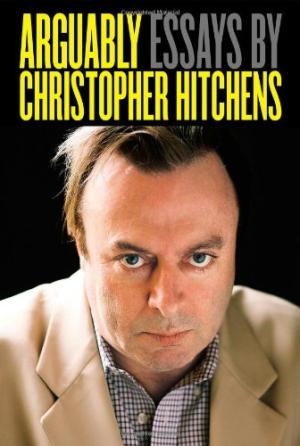
I was going to let Christopher Hitchens rest (lest he is in heaven chafing at the sound of me typing) but then got a nose-full of this warm, cuddly obit, for him by The New York Times‘ boy conservative Ross Douthat.  I’ve written here before that Douthat as a thinker gets everything backward, not looking at the world with true inquisitiveness so much as constantly articulating an a priori conservative identity for himself that the world and facts conform to later. (We start with a love of Ronald Reagan and then try to figure things out from there.) Now he fondly teases another dead man. He cites Hitchens’ bluster about godlessness and says it tacitly reveals what must have been some sort of basic belief in a deity–that Hitchens was constantly saying “no” to a non-entity and was thus not atheist but rebel (Like Job!) So, really, could his anti-theist polemic have happened in a vacuum? Wasn’t there some entity there to argue with? Or, as Descartes argued, isn’t the ability to grasp a perfect being proof that that being is real?

Actually, Hitchens spent a great deal of time trying to find an antidote for this age-old fallacy, one that in one form or another has befallen many Christian intellectuals, that the very concept of a God (or the fight against the concept) is proof he exists. This 1,000-year-old plus ontological hard sell, pushed by Descartes most famously, has been flushed down the toilet often, by Kant most memorably, who said that this reasoning boils down to a maddening tautology, “We know God is because God is.” Hitchens himself took to task the similar logic of C.S. Lewis: Anybody who came up with the idea of a God would have to be mad … so the fact that somebody came up with it despite it all that means God’s existence must be true!

It would have been a really funny, ironic article if Douthat had merely said Christians loved Hitchens because he was a really smart and charming atheist and just too damn irresistible to hate and because love is (or ought to be) the Christian tool with the most reach. It’s another thing to try to indoctrinate a dead man after the fact into a silly cosmology, try to make a net wide enough for Hitchens’ clear-eyed rationalism to be somehow folded into Douthat’s fairy tale and made whole with it. If I were Hitchens, I’d prefer it if somebody told me I was going to rot in hell while fox hounds snacked on my intestines.

The end of the article is simply an insult to everybody who thinks: “Rigorous atheism casts a wasting shadow over every human hope and endeavor,” says Douthat. OK. If I am not allowed to call Douthat stupid (after all, he went to better colleges than I did), then I can at least call this sentence infuriatingly patronizing. If you see off to the right of my page here, there are some 34 pieces of music. I want to testify that every one of them was made while I was drunk on the pernicious wine of rigorous atheism–the knowledge that there is no God (and perhaps even no listeners). I’ll be harsher. I’ve lost relatives, some of them as close to me as my heart, that I have no hope of being reunited with ever. That sad fact is made warm by the knowledge that loving them was a process, that I loved them first with the selfish love of an infant, then that of an adult with some understanding. That love was born, grew, matured. And all processes come to an end, something children come to understand, at least seemingly until they turn into adults. I don’t need a “God” to make those relationships meaningful or the false idea of perpetual life to give them a perspective they don’t require or deserve.

Douthat, who has in the past arrogantly imposed rigidity in the thinking about international affairs (in Libya, for instance) as a cold slap at inchoate humanitarian aims, suddenly falls short in sangfroid when it comes time to attack the most horrible idea: hope is no excuse for illusion.

Perhaps we should turn to Spinoza, who did talk a lot about God, but tended to see “him” as process, as nature in motion, unfolding in mind, which was inseparable from the imperfections of the wasting body, and not as a white bearded celestial mountain man watching over us. All humans are blessed with intuition, and feeling the presence of a greater power is part of that particular spiritual talent. I guess you could make the sensual argument: just because we perceive the color red on a tomato doesn’t mean the color red doesn’t exist, and thus if we feel a God there must be something to that. But intuition might also lead you to a plethora of Gods, goddesses, voodoo rituals, wiccan love spells, space aliens and other ideas your intellect cannot be accountable for and reason won’t accommodate. It leads you to abdicate your responsibility to your here and now.

I don’t think Ross Douthat is dumb; I just find him, for lack of a better word, incomplete. But we’re all a lot more incomplete without people like Hitchens. So maybe I’m not so much angry at the article as sad, because now Hitch is gone and all of us incomplete people are running around free of his delimiting logic to continue chattering our incomplete ideas thinking we’ve been made, by some abstract god, whole.

Dear long-suffering Beauty is Imperfection reader:

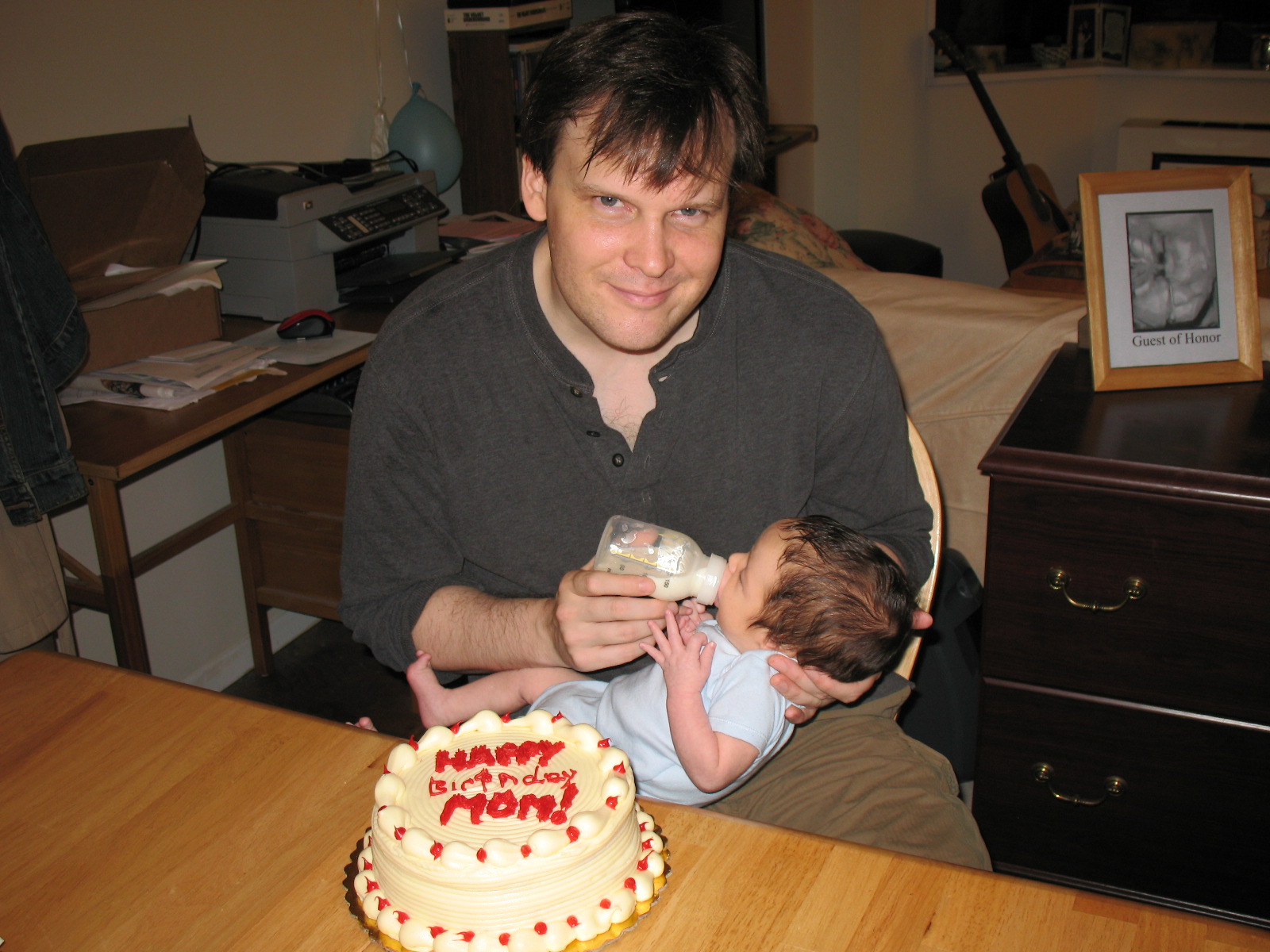
You probably feel lately like my son Xander looks in this picture, asking, “Where is Eric? Where are the freakin’ blogs? What did I do? What is happening to me?” If you are still reading, you must crave my abuse like love. I thank you for that. If you’ve been checking in and missing me for the past few months, I apologize.

I confess that although I have been a prolific writer in the latter half of 2012, it was not here. I know that a blogger makes a sort of social contract with you to keep you updated on his doings, attitudes, new thoughts, etc. Indeed, I sat down a couple of times to offer my thoughts on Occupy Wall Street, the Republican primaries, etc. … but often I let these unfinished posts sit on my server through the fall as I labored as a work-at-home father. Even the Christopher Hitchens article I posted earlier tonight was two weeks old. I had it 70% written on the day his death was announced, and I let it sit, unable to get it Christopher Hitchens perfect before I went home to Oklahoma to enjoy Christmas with my family. For most of the fall, I was working on fiction–doing rewrites of the five novels I’ve got on my hard drive. This has been difficult enough to do with a baby, but doing it and being a full-time blogger has been almost impossible. I am considering publishing these novels myself in 2012 as soon as I have a couple of professional editors look them over. (This includes the serial “Letters to My Imaginary Friend, Leticia,” which was first published on this blog.) When that time comes for my books to arrive in your Kindle, I’ll let you, my readers, know right here. You’re special that way!

The thing I most wish I’d done is spent some time talking about the Occupy Wall Street movement. I think it’s one of the most interesting political developments of the last decade, and yet it was something I never went to see for myself in my own city. Mainly this is because of my new family and work situation, which made it impossible to go out. But also I feel, as I get older, that I no longer have to be at the “in” happening to understand it or take what I need from it intellectually. I watched the videos and read the blogs and heard the arguments. So I might add that I also refrained from talking about Occupy Wall Street because even though I agreed with the general idea, I was skeptical about specifics of the movement, which were precious few. My first drafts about it thus turned out curiously negative about the entire venture, and at the risk of being misconstrued without time to perfect it, I let the piece languish in my computer’s sleeping brain. I might publish it later as is or with the promise of a follow up, but at this point, it would be a little bit like staircase wit to talk about OWS, the drum pits and the fetching naked girls dancing about for economic equality, which is apparently what it takes these days to get the subject on CNN.

I had a wonderful Christmas; it was very important to me to go home because my son got to meet his relatives–the large extended family I grew up with in Oklahoma City. I was blessed to have all my aunts, uncles, grandparents and cousins grow up in the same town with me (symmetrically arrayed on both mother’s and father’s side). The family I grew up with has just about everything in it: rich, poor, intellectual, down home, cosmopolitan, alcoholic, certifiably crazy and criminal … you name it. And though I left home at 18, I have never taken for granted what they offered me as a kid: My entire psychological makeup comes from having all these points of light on a string. The idea that Xander wouldn’t have as many contributors to his development as I did … especially now that I have moved away and my parents are not alive … well, it makes me too sad, and makes my trips home that much more important and poignant. I especially enjoyed some talks with my 84-year-old grandfather about his life, which I hope to share in memoirs eventually. We had two new babies this year, Xander and his cousin Scarlett, and though I always love my family’s attention, this year I was greedy only for the babies to have it.

Stephanie and Xander and I are spending this New Year’s at home recovering from Christmas illnesses we picked up in Oklahoma. Tonight we’re spending New Year’s Eve in our apartment and keeping it low key. I don’t feel the need to be anywhere other than with my little family and appreciate the things I have. But if you are reading this, then I’ll also say I appreciate you, dear reader. My postings will probably remain sparse, but hopefully I can do a little better than I have recently.

Have a happy New Year.

When cultural critic, pundit, polemicist and essayist Christopher Hitchens announced he was dying last year, it’s likely a number of people wished they could stuff their own viaticum down his throat for any number of his sins. Christians likely hoped for a deathbed conversion from this, one of the most famous contemporary atheists, or as he would have called himself, “anti-theist.” Liberal pacifists who for so long considered Hitchens one of their own likely wanted him to recant his support for the Iraq War, a conflict he considered a humanitarian rescue of a failing nation rather than a corporatist, imperialist incursion by a rogue United States president. Still others might have hoped he’d say he was sorry for the perfectly manicured anathema he cast at Mother Teresa, Garrison Keillor, Gunter Grass, Michael Bloomberg, Valerie Plame, Juan Cole, Ronald Reagan, Jerry Fallwell, David Mamet, Henry Kissinger, the state of Israel, Bill Clinton, George Galloway, Sidney Bluementhal   …  I’m sorry. Such a list of his targets would be so Pynchonesque in length that it would have to postponed indefinitely. Hitchens was willing to pick fights with anybody.

In fact, the fawning obits already pouring in from all over the world would likely be richly ironic to a man who never respected the dead. When Reagan died, the Hitchens eulogized him as being dumb as a stump. When Fallwell died, Hitchens said if you gave him an enema you could bury him in a matchbox. Today we remember Hitchens the Orwell fan, the former Trotskyist (not Trotskyite, which is diminutive), the unregenerate drunk and flirt, the party animal with an unparalleled wit who could drink 8 vodkas and then write a perfect 1,000 essay in a half hour. The guy who loved to lord it over the hot co-eds, who brandished the words “moral” and “irony” as if they were his own guns taken out of packing oil nobody else was allowed to touch.

Try sometime to imagine you’re Christopher Hitchens, roaming around in rooms of people who talk slower than you do, who are not as quick, that you have an intellectual hammer to swing in rooms where everything looks like a nail. It helps not just that you’re smart but that you value ideas in the first place, of course. Many people, despite Susan Sontag’s Eeyore-like wail to the contrary, love big ideas. Few of us are given such a mind as Hitchens’ to articulate them. And yet to go into Hitchens’ universe is to not simply think differently but also to indulge several obsessions and even predictable modes, some of them as Homeric as science (we live in a world stamped by primitive monkey DNA), some of them crashingly idiotic (women aren’t funny). He made pet obsessions out of anti-Zionism, the misuse of language (he’d quibble about your word usage even if you largely respected the dicationary) the creeping dangers of radical Islam, the dangers of ethnic nationalism, petty demagogues like Al Sharpton and tinhorn dictators like Slobodan Milosevic. His idea fixes about fascism caused him to see it everywhere in sometimes annoying, reductionist fashion (everywhere from North Korea to heaven to Harry Potter’s Ministry of Magic.) He abhorred terrorism, but said it was morally defensible against oppressive states. Nobody was allowed to use the word “irony” but him.

He was skeptical of those who were quick to shout charges of racism or anti-Semitism. But he was quick to defend his friends in disingenuous ways. He attacked those who said Noam Chomsky supported repressive or murderous Marxist regimes, but wouldn’t admit Chomsky was skeptical of independent reports of Sandinista oppression and Khmer Rouge genocide because he couldn’t stand any idea that would make the U.S. look morally acceptable by comparison. And of course Hitchens’ defense of and friendship with Holocaust-denier David Irving embarrassed him repeatedly and made easy fodder for Hitchens’ critics no matter what the subject. Even Henry Kissinger, when confronted by Hitchens’ charge that he was a war criminal for various activities in Southeast Asia and South America, simply pulled the “Hitchens is a Holocaust denier” defense, which, stupid as it was, tended to get repeated–later on, by liberals during the Iraq War.

Hitchens called himself disputative, not contrarian, but it’s not hard to locate him in the school of dialectic that Hegel devised and Marx made crude–every thing, whether it’s an idea or a people, will eventually come in conflict with its opposite. But Hitchens was an innovator of the process. It’s not enough to say God doesn’t exist (a banal idea by now, even for people who have come to realize it through ontological reasoning or, even simpler, through total lack of proof). Hitchens took it further and imagined how horrific a God as Christians imagined him would be–just like a North Korean dictator who saw all, knew all, forced you to worship him under threat of eternal sulfurous burning, and never let you roam free of his purview. As Hitchens famously put it remarking on heaven, “At least you could leave North Korea.”

But it also takes a certain arrogance to hold every supposition up for scrutiny, and then believe your own antithesis with such utter conviction. It’s a lonely world for those who ask, What if our sitting president is a criminal? What if giving a dying soldier his last rites violated the Hippocratic oath of “First do no harm” because you were lying to that soldier? What if evil American imperialism could be used to stop a more evil genocide? What if pacifism is just not moral but a moral abdication when you see someone suffering? Why doesn’t someone simply call the police on some of these Catholic priests accused of child sexual abuse rather than leave it to the church? What if Jerry Fallwell made everything up? What if smoking is a good thing?

To be a thinker doesn’t mean espousing each contrary idea, but at least confronting it. It’s that due diligence of thinking that makes it hardest, even for those who value it as a rich experience of life, not to mention those who don’t have time for it. For Hitchens, belligerence was not just an end, but the only way to work through consciousness and illuminate the things we value to find out if they are deserving. As a literary critic, he could not just respond to your ideas but locate them in the work of people who came before, find out what tradition you were thinking in even if you yourself didn’t know. He probably knew you were paraphrasing Flaubert or Locke or Spinoza or Plato before you did. (Bet you didn’t know “Dumb and Dumber” has roots in Flaubert, didja?)

His own drift from socialism allowed him to break from the left over the course of the ’90s. He disavowed Bill Clinton for his behavior during the Monica Lewinsky wars (and even snitched on a Clinton underling to investigators) and questioned the left’s feeble moral response to the evils and growing puissance of radical Islam. For a few months after 9/11, he seemed like the most reasonable leftist on Earth–saying that the past sins of the United States did not bear tolerance of a religious leader willing to kill thousands and revive a medieval caliphate, from safe within the bosom of countries where raped women are stoned to death  for adultery.

Unfortunately, that magical lucidity escaped Hitchens, quickly and tragically, as he embraced the America-led Iraq invasion, one of stances he was probably best known for at the time of his death (if not his vitriolic screeds against all religions, Jew, Christian and Muslim) and for which he showed no remorse  to the end. It’s likely that Iraq will be written on his Hitchens’ heart as surely as Calais was written on Bloody Mary’s or the swastika on Heidegger’s. Hitchens, a man who had always been best at thinking through an issue to the end, reducing it and then reducing it some more from its inconsistencies, we were shocked to find agreed with George Bush’s policy of pre-emptive war. His reasoning at the beginning seemed sound. As U.S. power had saved Bosnians from violent revanchism in the 1990s, so too could it save Iraqis in a state liquefying between the clumsy palms of a tyrant. More to the point, he said it was America’s responsibility to clean up its mistake in empowering Saddam Hussein in the past.

But in hindsight, it seemed that Hitchens, like other formerly wishy-washy liberals, had found a war he could like, an enemy he could hate enough to remove with violence. A lot of the little problems with his reasoning that seemed so small in 2003 would become big later: Saddam Hussein’s fascism, repugnant as it was, was a bulwark against the kind of Islamism Hitchens hated, not an example of it, and the invasion was more an opportunity to settle scores with enemies than confront the big idea. That made a foggy war foggier. Lumping Islam and fascism together into a sloganeering portmanteau word “Islamofascism” was the kind of activity Orwell might tell us to watch out for, since it robs each concept of their nuances and allows its audience (victims?) to become tools of the word’s creator. As for our adventure in Iraq, it didn’t seem to matter to Hitchens and the hawks that the people we were invading might understand our revenge motivation better than we did and therefore find us worth blowing up with roadside bombs. It didn’t seem to matter that we were fighting Al Qaeda in Iraq only because Al Qaeda knew we were coming there, not because Iraq posed a threat in the first place. It didn’t matter to Hitchens that the invasion would likely spark a civil war, even though the war’s architects had predicted it themselves. It didn’t matter that George Bush was in such a hurry to seize the political moment after 9/11 to garner support the war that there was no post-war planning for the conquered, obstreperous mess Iraq would become.

And the biggest fallacy of all, one that as far as I know Hitchens never had addressed to him, was that you can’t solve a humanitarian crisis by replacing it with a much bigger one.

We all know how it ended. On the same day Hitchens died, America snapped closed its military bases in Iraq, and The New York Times began running brand new information about American atrocities committed there, including the Haditha massacre. The bloodletting against civilians in Anbar Province shows again that all wars, no matter what they start for, usually turn into something else, and their meanings become subducted under larger ones. The good intentions of soldiers, if we take them for granted, eventually turn into a desire for self-preservation and revenge, amorality and moral perversion. After this became apparent and the war started to fall apart in 2004, Hitchens the humanitarian turned into Hitchens the propagandist, moving from critic, a role which he was born to play, to advocate, on the other side of the dialectical divide most often inhabited by liars and obfuscators. In his new role, he became a right-wing Sphinx, dangling tantalizing paradoxes and half truths about the war and insulting people who came back with disturbing facts. He continued to offer teasing admonitions that weapons of mass destruction were indeed found in Iraq when most investigators had debunked that myth. He suggested that an Al Qaeda terrorist leader Abu Musab al Zarqawi had been in Iraq as a guest of Saddam Hussein, even though he was mainly operating under an assumed name in a part of the country not under Saddam’s direct control. There is some question about whether Iraq intelligence agencies knew he was there and did nothing. But then again, George Bush had a chance to kill Zarqawi in Iraq early, but chose to do nothing because he needed extra reasons to invade. Zarqawi was being used by both sides. The Granada-invasion-era Hitchens saw through such casuistry; the Iraq-era Hitchens practiced it.

When documents emerged from Italy showing Iraq had tried to purchase enriched uranium from Niger and turned out later to be forged, Hitchens saw a conspiracy and suggested that the forgers were trying to embarrass the U.S. and obscure real proof. In other words: Fake proof is proof in lieu of real proof. Try running that by Karl Popper.

Hitchens would always remind you that he was in Iraqi and he saw Iraqis throw roses at the feet of invading Americans. True enough as it may be, a rose, as Yeats knew, is a symbol invested with millions of meanings, and in this case could well have meant “Don’t kill us, Yankee.”

This is the Hitchens many of us came to know in the 2000s–dishonest with a horrible case of bluster. He tried to put an elegant classy spin on what was actually name calling–“moral idiots,” in the case of Iraq War opponents or “bitch,” in the case of Richard Armitage. He used violent imagery including strangulation to describe what he’d like to do to “fake” pacifists on the “left.” A lot of us who hadn’t read him seriously yet (me included) likely took this personally. Meanwhile, he was buddying up with the architects of the war like Paul Wolfowitz and demanding journalists apologize to them for what was, to most of us, honest reporting that Iraq was going down in a frisson of anarchy. If you called it anarchy, he’d tell you you’re not allowed to use the word without reading Mikhail Bakunin. This wasn’t a contrarian but a person who seemed to have stood too close to power and caught its cold.

But what he was more known for as the war waned was his resumed religion line, attacking Israel, Islam, Hasidic jewish practices, Roman Catholic encyclicals with a wit remarkable for its endless serrations. But his bluster was intact. He once actually implied that things would have been different for famous murder victim Kitty Genovese if he had been there, ready with knife in hand to save the day. After Hitchens found out he was Jewish in the late 80s (his mother had committed suicide in the early 1970s but concealed her religion), he proudly waved the flag of Jewish anti-Zionist, but eventually conceded that Israel was a status quo power and therefore worthy of defending against a saber-rattling Iran. It’s another way to follow Hitchens’ thought process–take one hatred and then let it be subsumed by a bigger hatred.

If he wasn’t easy to pin down, it’s probably because his thought process looked inconsistent. But then, whenever you picked up his articles after a while, you sort of found the rhythm. The ethnic nationalism of Israel or Serbia were repugnant to him, the self-governing instinct of Iraqis and Palestinians were worth fighting for. Socialism still requires the strong to help the weak and Marxism requires that these self-governing impulses will flourish in any case. If the U.S. is helping a democratic impulse along, isn’t that sort of Marxist?

Of late, Hitchens seemed to have become acceptable to leftists again. He endorsed Obama and called the McCain-Palin ticket “appalling.” He explained his position to conservative super-witch Laura Ingraham with a little bit of reason and a lot of flirting during her talk show, a gambit that embarrassed the silly woman no end (something most good lefties would be too politically correct to try). Lately, he reviewed David Mamet’s book about his conservative conversion and very easily cut through most of the dumb reasoning. In a word, Mamet’s book was “irritating” and Hitchens believes the playwright didn’t really understand Friedrich Hayek, that dubious Austrian butt of wine that present day conservatives purple their lips on.

People talk of his charm and his loyalty to friends. But Hitchens turned on many of them after 9/11. Katha Pollitt of “The Nation,” Hitchens’ former stomping grounds until 9/11, damned him with faint praise in her obit while moving through a list of objections to his sexism, his bullying and his ability to finesse imbecilic ideas and black and white reasoning with airtight sentences that sounded a lot like logic. (Say, his take on humor, which in Hitchens view serves only the biological imperative to get laid, and is thus only the vouchsafe of males–a pretty interesting idea until you remember that guys tell jokes to each other, too, as do women.)

But Pollitt, now in the rare position of having the last word with her old frere, can for her closeness to him do much more harm with a smaller blade. Which do you think is worse: Some online Christian zealot insisting that Hitchens is hellbound for his beliefs, or this Pollitt disavowal of her colleague and friend: “I don’t know how long Christopher will be read. Posterity isn’t kind to columnists and essayists and book reviewers, even the best ones.”

In a word: Ouch! She’s right. Everybody remembers George Orwell. Nobody remembers Leslie Fiedler. But the line is more delicious because Pollitt is a scorned friend. Her comment limns underlying hurt, pettiness and jealousy. She seems smart enough to know that, but didn’t care.

I remember Hitchens’ obit for his own pal, Susan Sontag, and in his introduction how he said the private mind has its own life, its own joys, but that the best intellectuals must sally out of the library and bring their ideas to bear on public discourse, lest they (or their work) become timorous curios in a library; perhaps this was a subtle dig at his compeer, who was probably more famous but nowhere near as prolific as Hitchens. As such things go, this memory of Sontag sounded an awful lot like it was about Hitchens himself. This was a guy drawn to Bosnia, Iraq, Lebanon, civil war-torn Cyprus and other hot spots, a guy who didn’t seem to like being alone, who needed the opinions of others, perhaps even dolts, to whet his observations, sharpen the life of his mind. He wrote about his death a lot, saying he’d entered the land of malady, but that the topic of death bores even him and offers no irony. He reported on it dutifully, explaining the awful food and the chemo, but his last real ideological conflict was the prosaic insistence that he would not get religion at the 11th hour. His comfort was fighting against those who would offer him comfort. But think of how that offers no solace. If he–if none of us rationalists–had Christians to fight with, what would be the truth to explore here? Is it that death is a stupid, not remotely illuminating? Should death even be part of a person’s narrative when it offers no clue to how they lived? Maybe it’s simply the end of the fight, which is why Hitchens seemed to keep writing prodigiously in the face of it and not giving in. Is it only to rage against the dying of the light?

I’m not arguing for Christianity here. But Hitchens’ last demand, that death should be illuminated only in its awfulness, seems to be a continuation of his black and white thinking, his lack of empathy at the expense of reason. He said that it would be humane to tell people on their deathbeds there was no God, because it would be the truth. It’s admirable to deny your own pain. It’s a little arrogant to deny others’ pain for them.

Pollitt was right in one sense: If Hitchens had had a 1984 in him, he’d stand a better chance of being remembered. People who create are always remembered more than people who disassemble. You can wave that off as jealousy or curtness. But if you take a broader view, you could also disavow Hitchens as little more than a professional opinion-haver. He said that his business was irony, and he used the word as if he had patented it, allowing none of the looser forms available. I’ll try to approximate what he meant by it through his repeated denials of what it wasn’t: Irony to him meant living in two realities, one belonging to people who think they know what’s going on and one belonging to people who actually do.

But his real career was simple polemics. And people who make this their business are always selling half a reality–the thesis without antithesis. Even those of us who call ourselves liberal and define ourselves by nothing else live in half-knowledge–live for an argument that like Caliban runs about looking for its reflection and never finds it. It’s artists who actually have bragging rights when it comes to synthesizing reality, which is why Hitchens prized literature so much. It might also be why he was so deliciously waspish: He wasn’t an artist and perhaps he was simply bitter about it (as many critics are). Susan Sontag called intepretation the intellect’s revenge on art, and though Hitchens likely agreed with her, his job was to murder the sensual and erotic every day with Enlightenment cutlery. You could, if you see things with the black and white chauvinism he did, see him simply as a jealous non-artist who used his great mind to live a well-lubricated life winning petty arguments, mostly by quibbling with tiny semantic points. He left us no great reporting, like “All the President’s Men.” He left us no great novel, like “Moby Dick.” He is not better than Jim Carrey for having discovered Flaubert seeds in “Dumb and Dumber.” You could say he taught us how to think, but Steve Jobs also died recently, and the fruit of his different thinking is so ubiquitous that I can’t process these words without it.

If he left me anything–a writer who never met the man or saw him in public–it’s the idea that thinking is a process that must be constantly honed, that assumptions must be constantly questioned. This is a way of life as joyous as discovering a new kind of butterfly and as tedious as continuously taking out garbage. If we get too comfortable with the way we think–something that’s easier to do as we get older and our minds are less dynamic–then we’re doing it wrong.

That I’ve learned by confronting the man’s ideas. And for that, I’ve got to thank him.

A Happy Day

It is a happy day, because my beautiful new niece Scarlett was born in Oklahoma. My family has grown a lot this year, and every new person creates a new viewpoint, a new foundation in our spiritual framework (whatever spiritual means to you). I hope to know her well, even though I live so far away, and share as much happiness with her as I have with her brother and sister. I hope to influence her life in some meaningful way, because I know she will also grow up and influence me. Welcome, Scarlett! Whoever you are, whatever you are, whatever you do, you are loved.

Got Testosterone?

Girly Man, With Son

I don’t know if anybody saw this article in The New York Times a week or so ago. It says that men’s testosterone levels drop after they have children. This study prompts the Old Gray Lady to ask, “Dads, are you no longer manly?” That’s right, it’s official, according to science. Being a dad has also made me a woman.

I have friend, a new father like I am, who answered the proposition that we’re not macho anymore with one word:  “Good!” What’s not to like that we don’t pick fights or try to pick up other people’s chicks anymore? What’s bad about the fact that my maternal instinct has kicked in around my newborn son Xander, who doesn’t, I think, need a football coach at this point?

Sorry to sound like a shrill feminist, but on one level, the questions the paper asked are insulting and set up a completely false dichotomy. If men really are more nurturing, less aggressive, less randy and less territorial after they make sprog, then there is obviously some biological imperative at work, right? Some good reason? Yet we’re supposed to get our panties in a wad, says the paper of record, because this biological phenomenon doesn’t accommodate the totally cultural concept of masculinity. In other words, the paper asks, shouldn’t we be protecting the image of ourselves as macho ass-kickers at all costs, even if nature doesn’t even think it’s necessary? What the hell is that all about, New York Times? Whom exactly, I ask, are we doing this for? Our relatives in the military? Clint Eastwood? Arnold Schwarzen-lecher? Our dads? The other guys in the locker room in junior high?

Nature, we’ve got to admit, really mocks us when it comes to reproduction. Our mandates, science suggest, are not static, but change. We are attracted often to people who are not good for us in any way. We often want someone badly who we later don’t want at all. Researchers have found that women like macho guys at one time of the month and girly men at other times–when they are not ovulating (the story I read said Sean Connery is more attractive during ovulation and Leonardo DiCaprio at the other end of the cycle. Put that on a movie poster! How about we call it “Moon Men”?) And while evolutionary biology has explained a lot of things, it still doesn’t explain why some of us are born attracted to the same sex and can’t be changed under any circumstances.

What in the hell kind of lessons are these to take from our vindictive Hebrew deity evolution? I remember an Esquire article written years ago called “The Big Dog Gets the Girl–The Return of the Alpha Male.” I loved the writer (a manly man himself who actually offered me a job once) but hated the ideas. He forced the reader to confront the thought that certain attributes generally considered “male,” including the randiness, the out-of-control lust, the aggressiveness, etc., were necessary and useful in a world of animals, which of course we are. You don’t have to go much further than your corner bar to see that females, regardless of education and despite all their bitching, respond to aggressive behavior and turn up their noses at the weaker protein (and these patterns don’t necessarily disappear if you’re gay). I have to admit that these are points hard to argue with. But then you get in trouble with your generalizations when you encounter people who don’t adhere to the rules. There are lots of guys who are effeminate (not homosexual, which is a different thing, FYI) and women who want to join the Army and go kill.

I think we lose our way when we think these mix ups are a bad thing. We err when we draw broad conclusions about what a girl or boy is. In fact, in a perfect world we could share, switch off, take turns at being boys and girls when the mood strikes us. The diversity among us–and within us–is just part of the imperfection of the sex drive, whose hallmark more than anything else is its drive to diversity (Thank you, Mr. Kinsey.)

This doesn’t have to be distressing news to you douches out there with your proud douche heritage. Nor to women who revel in the rich rewards of their feminine wiles and all the free margaritas that come with them. Because being only an alpha male all the time, guys, or being only girly girls all the time, girls, are limitations that can rob you of the richness of experience, whether you have a dick or not. This is what the sexual revolution was partly about: playing the rigid roles 24/7 was making us all assholes. Haven’t you watched Mad Men?

So, if you have read The New York Timesand feel confused, I personally give you a dispensation. Go be a boy. Or a girl. Or not.

Insight vs. Logic

I remember having this conversation with my Christian aunt a few years ago: The reason we tend to have progress is not only because we are logical, but because we have intuition and insight to reflect on that logic. A number of people have suggested that it’s one of the reasons robots will never be as advanced as humans, something I happen to believe. How do you, with a bunch of mathematical rules, create something that can reflect on itself reflecting?

So I was tickled when I saw this article on Yahoo! the other day about those who believe in God being more intuitive than reflective. According to the article, people who are more intuitive tend to believe in God. They also tend to screw up math and logic problems.

This doesn’t mean that only dummies believe god, of course, it just highlights philosophical problems going back to Immanuel Kant’s time. People who believe only in a mathematical/deductive reasoning approach to knowledge tend to completely miss the ideas that experience and intuition offer. Reasoning is indifferent to pain, and it’s our innate spirituality, the fact that we can imagine ourselves in somebody else’s head, that we tend to be more humane.

But intuition without logic is bad, because it can have you believing in fairies and wood sprites and … yes, even a benevolent deity who invented everything. Indeed, intuition almost always requires a human agency or a spirit whose hand operates the loom of the world, even though logic and science and millions of years of progress have taught us otherwise. Because humans have an innate ability to see through other people’s eyes, they always assume there are eyes out there. Sometimes there aren’t.

The problem is that knowledge and understanding require both things. Intuition without logic leaves you with bizarre religious beliefs (I know god is there because I FEEL him.) But logic without intuition leads to a world where pain and suffering are not comprehended, where the essence of things is not understood or even how the essence of something changes. Logic understands how to win an argument but doesn’t understand how the terms of the argument and the rules change.

I am an atheist, as my long-time readers might have figured out. But I think that man is a spiritual creature, and that this is mainly because of our brain’s ability to perceive things that cannot normally be understood through objective reasoning (though, unfortunately, it’s also why God will likely keep getting reinvented over and over, no matter how many times science kills him off). Despite my apostasy, I’ve always been a little biased toward intuitive types, mainly because I know lots of people who are extremely logical and can argue any point with perfectly manicured precision but who nonetheless lack basic wisdom about the world and themselves in it–and for that cause themselves and others pain for it.

There’s an appealing idea that sometimes a relatively dumb person can grasp things through his intuition that the smarties cannot. That meretricious proposal underlies a lot of our political rhetoric today, and gives people like Sarah Palin a populist appeal. She doesn’t need a degree. She’s got the common sense of the people. But to put faith in that kind of intuition is as good as flushing your whole brain down the toilet. To think to the best of your ability about things means trying to aspire to do both the due diligence of logic and reflect on its possible failures. Even if you’re not very good at one type of thinking or the other, you have to try to do both. If you’re a Christian, I would argue to you that common sense and willful ignorance do not sit well together side by side, and you cannot forever argue against ideas like evolution with faith alone. On the other hand, if you’re married to objectivism only, like the troll Ayn Rand, you will tend to see the world in either black and white, not knowing that sometimes the world can be both.