Feeds:
Posts
Comments

Archive for the ‘Fiction’ Category

Cover photo by BogdanV.

In the next couple of months, I hope to put out my 10th novel. I guess you could also call this my eighth novel, except that I broke up one of my fatter books a few years ago into three pieces, hoping readers might be more amenable to it if it came in pieces.

The new book is called The Silly Dreams of Shallow Sleep, and it’s a follow-up to my novel Zip Monkey, which I released some years ago. The series follows the adventures of Angel Bimini, a former pornographic actress who has become a New Jersey private detective.

In the new book, she is asked to follow the business dealings of a dead cancer researcher. His ex-colleague thinks his death might have something to do with the Chinese government and its attempts to infiltrate the U.S. scientific research community. Angel is also dealing with a dependency on prescription painkillers, something she started taking after sustaining injuries in the previous book.

I haven’t written a novel in a few years. I’ve been too busy doing music, which is a lot easier for me to write, produce, and release (as you can tell from my prolific output as Salon de La Guerre). But I started tapping out a new work on Angel Bimini a couple of years ago when I remembered her story really wasn’t finished. I’ve even got sketchy ideas for a third book in the series.

I don’t write long form fiction with the same quick facility that I write music. While it’s easy for me to write dialogue and characters, it’s harder for me to keep a long plot sustained, especially a mystery story. The main thing I usually wanna do with my writing is make people laugh, but keeping the audience interested over the course of a book takes a little bit more effort.

I’m having some friends look over the latest draft before I release it. When I do, it should be available as an ebook on Barnes & Noble and Amazon. I know I promised to have paperback-on-demand versions of my books at some point, but these take a little bit more money investment and are a bit more of a design challenge, so I ask for a little more patience on that front.

Watch here for more news. And if you’re interested in any of my other nine books, you can find them here.

Read Full Post »

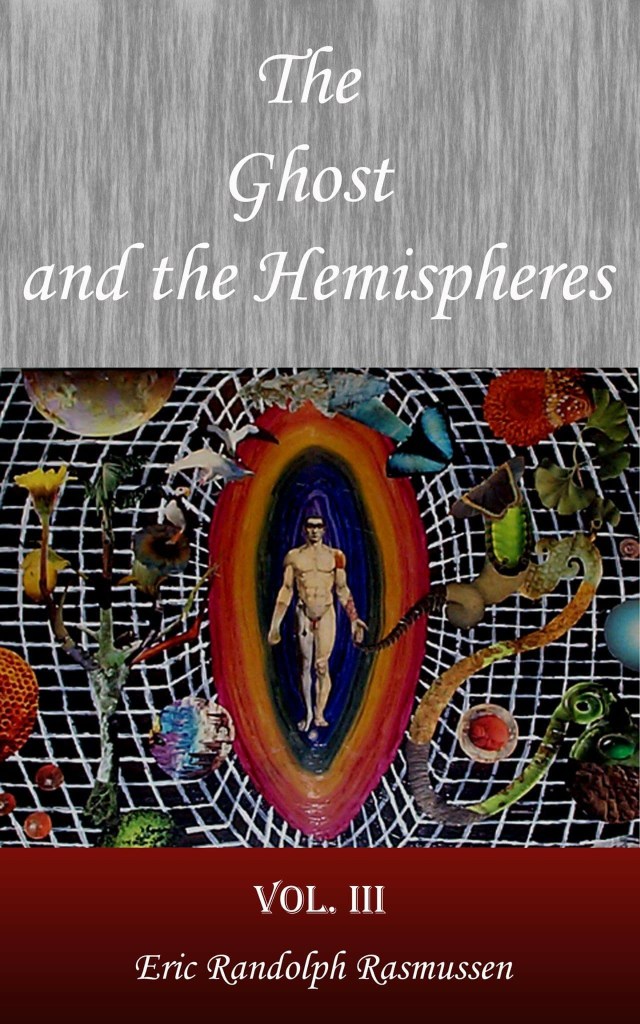
The third volume of my serio-comic epic novel The Ghost and the Hemispheres is now available as an e-book on Amazon.com. This was the last part of what was originally supposed to be one giant book. I noticed when I was still talking to agents that the size of the work put them off, so I have chopped the novel into what I hope are three more palatable bites.

The book is about the family of Octavio Albedo, a coffee baron who builds his empire in the early 20th century in northern Nicaragua. Octavio’s success helps build the town of Ascension, which over the years sees civil war, hurricanes and upheaval. The town is also beset by metaphysical problems: Its denizens start to think that they are living half in a dream, half in reality. Some are possessed by demons. Others see themselves caught in the conspiracy of capitalism.

In Volume 3, we follow four of Octavio’s great-grandchildren after they’ve fanned out into the world. One is a blood-thirsty, murderous Contra whose downfall comes when he finds his own capacity for goodness. Another grandchild is an inmate in a Honduran prison who’s got a secret formula for an amazing and possibly valuable street narcotic tattooed on his back. He becomes a highly prized target of several gangs. Next is a child prodigy painter in Miami who finds that the demons chasing her family have somehow inspired an awe-inspiring artistic talent in her.

Despite leaving their war-torn country, the various Albedos still find themselves plagued by various feelings of unreality, post-traumatic stress disorder and thirst for revenge—but an even deeper hunger for understanding of their world and what their madness really means.

Lest that all sound too austere, I should remind the reader that the novel is absurdist and funny. Here is the description on the Amazon site:

“A mountain town in Central America lives half in reality and half in dream. In Volume 3, the great-great grandchildren of Octavio Albedo fan out across the hemisphere trying to put their lives back together after a decade of war, but find that as spiritual creatures, their flesh is something best inhabited only part time.”

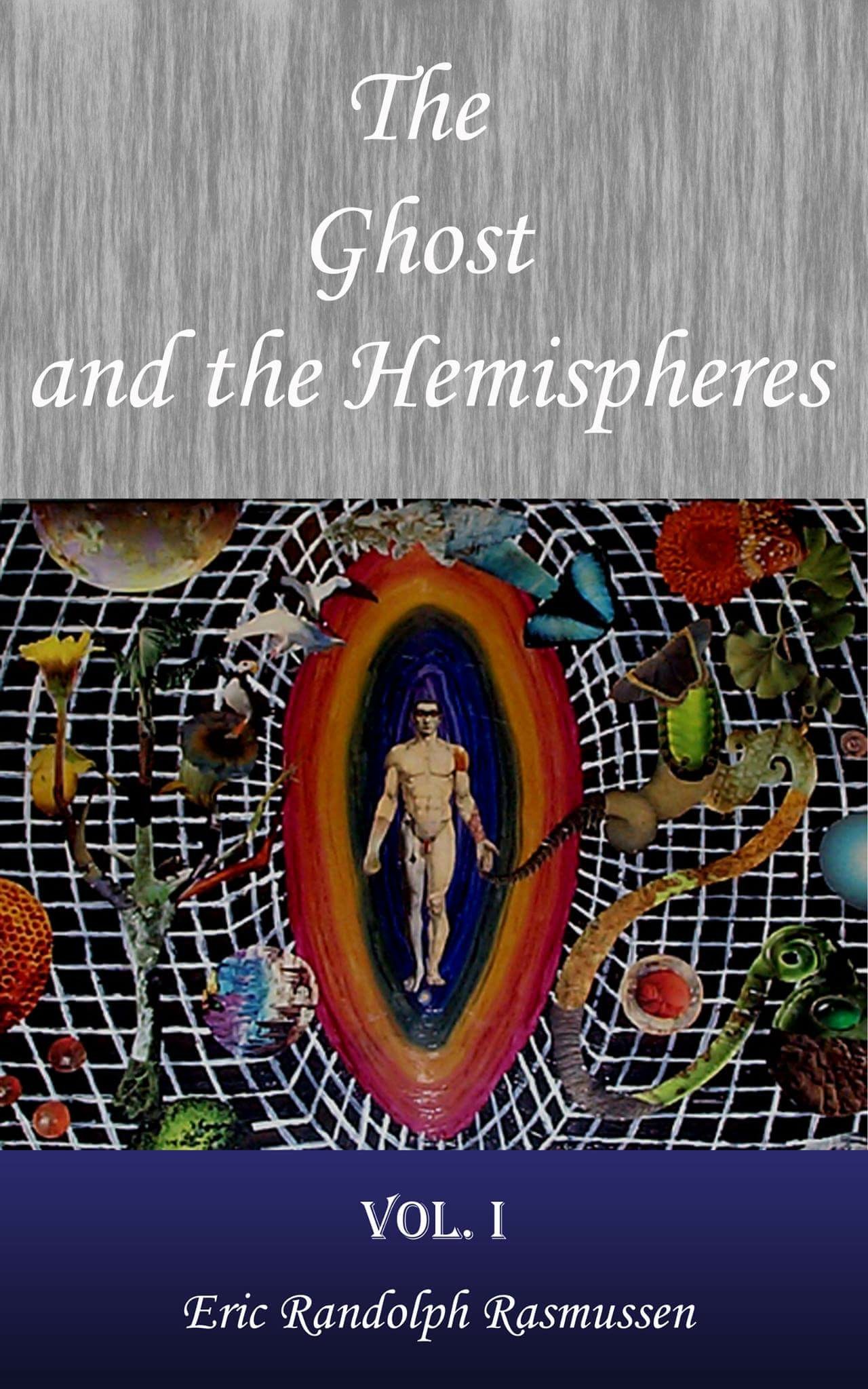
You can check out Volume 1 of The Ghost and the Hemispheres here.

You can check out Volume 2 here.

Again, the cover painting and design is by my friend Corey Brian Sanders.

Read Full Post »

Coming soon to Amazon … the last novel in my three-volume work, The Ghost and the Hemispheres.

(Cover design and painting by Corey Brian Sanders.)

Read Full Post »

Ghost and Hemispheres Cover Vol. 2The following is an excerpt from my novel, The Ghost and the Hemispheres, Volume 2, currently available as an e-book on Amazon.com.

As the students watched TV in the University Club, for the first time, Patroclus noticed that some 95% of the content came from the United States. There was Bewitched and I Dream of Jeannie, two television shows about wives possessed of magical powers, but rather than using the magic to free themselves from sexual slavery, penury and exploitation, the women instead served the monetary interests of their human slaveholder husbands. All they would have had to do was snap their fingers and their masters’ heads would have popped off like champagne corks, but instead they were alienated from that head-ripping-off potential by the awesome power of ideological hegemony. There was also Bonanza, a serial that humanized and normalized the rape of the American West by white expansion and subjugation (and let us not forget the dialogue wasn’t too bad).

When he sought reading material from the Balladares Pharmacy he found Time and Cosmo and Reader’s Digest and the Saturday Evening Post. He found pictures of a woman draped over a box of Pall Mall Gold 100’s, claiming that “You make out better at both ends.” A Lipton tea ad asking him if he was feeling “fagged.” Delco “Pleasurizer” shock absorbers for a better ride. “Husband pleasing” coffee. Sugar, which “turned into energy faster than any other food.” A car called a “Swinger.” White go-go boots. Half-nude bodies used to sell aspirin, women in suggestive siren poses meant to sell Pepsi. Pills for “tired blood” and women’s anxiety. He studied the cola and beer advertisements with deep post-structuralist curiosity.

The more girls buzzed about him, trying to confuse him, get his attention, diffuse his energy, raise his sap, get his blood up, dilute his prana, etc., the more Patroclus began to read from the books that Father Cuadra suggested: Hegel, Marx, Paulo Freire, Antonio Gramsci and Chairman Mao, and then finally, the book about the Crazy Little Army—Augusto César Sandino and his war in the Segovias. That war had taken place around Patroclus’s hometown. Yet nobody up there ever talked about Sandino. It was verboten. Like other young proto-revolutionaries, Patroclus also read Che Guevara and listened to the recordings of Radio Rebelde.

Every new Marxist walks about with a different set of eyes from the ones he had before. Everywhere Patroclus now saw things differently. One day he was out with Rosemarie and she asked him, “Should I get the chocolate-covered cherries or the chocolates with nothing in them?”

“Your choice is an illusion of freedom.”

She pinched his cheek.

“Cute.”

“I’m serious. This is meaningless.”

“What are you saying, exactly, when you say this is meaningless?”

“I want to see other girls.”

She started to cry and he stood listening with a stone face, knowing he must take responsibility for the pain he had caused her, but also willing to live with it for the sake of his new conviction, which required pain if it were to be genuine—his girlfriend’s pain if necessary.

All the material wealth he saw others chasing convinced Patroclus that he somehow did not really live in the world at all—or at least that he was living in more dimensions than he was seeing. Those advertisements, those nude bodies, those TV shows made him realize that his heart and body had been colonized. That every move he made was the act of a puppet dancing on a string. As he sat in the hot, dusty railroad colonial corridors of his dorm studying his medical books, dust motes flowed sideways and down and from off the floor—in a space without gravity. Every song, every coo of every silly coquette—everything was fabricated, he realized, to hide the truth of things. A woman once raised her finger to Patroclus to argue with him after she had shortchanged him at the pharmacy. He stopped listening to her and regarded her finger. As it rose, it also fell, and went sideways at the same time. Her voice was high and low at the same time. They were speaking a script somebody else had written for them. They had divided themselves to keep the owners in power.

His life was now seen in a kaleidoscope. And the more he was at odds with reality, the more he saw proof of his other self emerging.

Read Full Post »

Ghost and Hemispheres Cover Vol. 2I have just released my eighth novel, also known as Volume 2 of my seventh novel. The Ghost and the Hemispheres follows several generations of a Central American family as they experience a coffee boom, civil war, ethnic strive, a communist revolution and its aftermath. As the historical drama unfolds, everybody in the small town of Ascension is suffering from some sort of existential disorder that threatens their very concept of self, being and consciousness.

Volume 2 follows Patroclus Evers, scion of a once legendary family of coffee growers, as he leaves home and goes to the city to study medicine. Very quickly, he falls under the sway of radical students, poets and priests. Yet his dedication to social change is conflicted. From childhood, he has been haunted by feelings that there is another version of himself haunting the world. This person is not only an existential threat. Patroclus also fears that this other him might be enjoying life a lot more.

Volume 2 also follows his aunt Pepa through her own version of capitalist success and downfall, as she seeks the sexual validation of wealthy men, all to spurn the one man she couldn’t have.

The novel is now available in e-book form only, and only on Amazon.com. I hope to release a paperback version through Amazon’s platform next year.

The cover painting and design are by my friend Corey Brian Sanders.

Read Full Post »

Ghost and Hemispheres Cover Vol. 1I am proud to announce that my seventh novel, The Ghost and the Hemispheres, Vol. 1, is now available as an e-book on Amazon. This is the first of three volumes, and my plan (hope) is to release the other two later this year and then to release them all in paperback form, maybe in 2021.

Superficially, this is a book about a Central American family coming to grips with change amid political upheaval and revolution. But it’s about a lot more than that. It’s also about science, chaos, narratology, the way consciousness is created, the way memory is stored, the way history is written. It is about the ways people pursue insanity to restore reality. It’s about the ways competing narratives come to define our history, and how truth by itself never seems to be good enough in that regard. Again, superficially, it’s about somebody else’s country, but it’s increasingly about my own.

I’ve been working on some version of this book for a really long time (don’t even ask). Finishing it feels a bit like a part of me is dying. Given our fraught political landscape, I’m a bit wary of how the book and its approach are going to be received, though. I worry it could get attention for the wrong reasons. So you, Beauty Is Imperfection readers, are probably going to be the first (and only) people to hear about it from me.

From the Amazon description:

A mountain town in Central America lives half in reality and half in dream. In Volume 1, Humberto Albedo, an adventurer and thrill-seeker, tries his hand at coffee farming in the early 20th century. His success leads to the formation of a town, and though he had run away from home to escape politics, the locals force him to become their mayor at gunpoint.

You can buy the book here. The book’s cover design and awesome paint were done by my friend Corey B. Sanders.

Read Full Post »

American BanjoThe following is a passage from my novel American Banjo, a story about several generations of an aristocratic American family. It was released earlier this year on Amazon.com.

From the diary of Sandra Eccles:

There is a simple elegance to life. There is a simple elegance to a good mystery. You jump on a ship looking for adventure, looking for drama, looking for meaning. And just as you find the object of your desire, your desire evaporates. I seek drama, and I find drama.

I think of Occam’s razor; the simplest explanation is the best one. The simplest way to write a sentence is the best way.

I wonder if I’m mature enough to live my life simply. I start to think of my father. I hate to think that he might have been right. That my defiance was a play I didn’t understand, and now that I do, the defiance means nothing. But you negotiate the paths to wisdom only through action, through praxis; you may climb a mountain only to find there is no longer a mountain to see. That is mountains. And that is philosophy. The journey was the thing. It was good you made the journey. But the wisdom isn’t what you found. The wisdom came from knowing you had to look.

I think about this after returning home and gazing upon the sleeping, topless figure of the woman who tried to steal money from me—the woman who is now my wife. How we got here is not important. I’ve walked through different rooms of life with her and the room we started in has been demolished. I can no longer know the me before Sieglinde. Nor care about who she was before or who I was.

She wasn’t a thief as I found her. She was asleep. People who sleep are innocent.

I had seen Priscilla earlier that day. Priscilla, the doyenne of my scene, the brilliant lawyer who had helped establish the intellectual underpinnings of “judicial interpretation as violence,” the woman who rebelled through textures, seemed to have become sweet on me … as a mother or something more.

“I have to say, when you were at the party the other night without Sieglinde, I began to worry.”

“About?”

“You two have been together for what … 18 months?”

“Two years.”

“What do you talk about?”

“It was a relationship born in a crisis. We emerged from that together.”

“Crisis isn’t a value.”

Priscilla pushed my hair back where she thought she saw a bruise or something. I pulled away. Evidently, she’d heard things.

“Is this an intervention?”

“I’ve come to care about you, Sandra. You’re focused. You’re ambitious. You hurt Sieglinde with a curt remark and don’t notice. She watches you talking to other women.”

“I can’t think about that. This is my book. My career. I won’t be stopped.”

“But she’s your lover. What if she wanted you to stop? For a baby, maybe.”

“I can’t be held back by that.”

“So leave her.”

I snorted a bit.

“I can’t do that either.”

Priscilla, wiser than anybody I’d ever met, waited for an explanation as she sipped her green tea.

“I can’t do it because she was the one who made me what I am. She brought me out.”

“Which makes her not even as important as your mother, who you probably wouldn’t respect anywhere near as much. You really feel as if you owe her your life? The way a child owes something to a parent?”

“Yes, a little.”

“Well, sooner or later, a child can’t owe something to a parent. She must know that what a parent gives to a child besides life is something more precious. Eventually, the parent must give that child freedom. That’s part of the contract.”

“In what law? Not the Torah?”

“In life. In love. You can’t sacrifice yourself for Sieglinde. You don’t owe her your soul. You don’t owe that to anybody.”

“Stop. I won’t do it. I won’t cut her loose.”

She didn’t talk for a long time, then finally …

“There are other people who want you,” Priscilla said. “Women who want to be with you. Who see your value. You don’t have to compromise. I found out a long time ago, even before I left my husband, what it means to be a whole person.”

“And what’s that?”

“Nobody can take on the responsibility of making you happy. And you can’t take on the responsibility of making somebody else happy. It’s too much to ask. And if you do, you’re not really allowing them to live up to being fully human.”

I drank tea and listened, and she pushed my hair back again.

“Cut her loose.”

Copyright 2012.

Read Full Post »

American BanjoI have just released my sixth novel, American Banjo, as an e-book on Amazon.com. I plan to release the novel in paperback version, hopefully later this year, along with all my other novels.

The plot: An heirloom Federal-style banjo clock built in 1804 is passed down through eight generations of a secretive family of ultra-high-net-worth Americans. Built shortly after the American Revolution, it has come to mean something different to all its holders. To Sandra Eccles, one of the family’s daughters, the clock may prove the guilt or innocence of not only a few founding fathers, but also her storied grandfather, who made munitions in World War II. His possession of a painting that might have been stolen from a Jewish family by the Nazis leads Sandra to try to uncover a puzzling skein of relationships and help her determine how good her forebears really were and what they were after.

I piece together the story line from various “diaries” of the characters, a cast from different times and places in American history, whose dreams and aspirations and ethics are different, even though the ways they aspire are somehow the same.

Read Full Post »

I’ve always described Game of Thrones as an eight-year object lesson in Stockholm syndrome. Almost every important story arc is about somebody coming to identify with their captors or kidnappers. How many times has somebody fallen in love with or identified with, those who have captured, degraded or beaten them, robbed them of their true selves? How many times have captives taken kidnappers’ values as their own? Theon was a hostage. Sansa was a hostage. Lyanna Stark. Arya. Daenerys. Jamie. Jon. It’s not one plotline. It’s more than half of them.

And after a week of reading unhinged rants by fans angry about this season, I’m starting to think the last hostages were the audience, the people too closely identifying with characters who “suddenly” did indefensible things, when in fact they had always been doing indefensible things. We cheered on revenge; we put our hopes in outcomes that couldn’t possibly be good and people who couldn’t possibly succeed in moral ways. Beheadings. Burnings at the stake. Crucifixions. Daggers in the heart. We were always happy to let these things happen to the right people–and that has always been the meretricious nature of fascism. (Our favorite character Tyrion nicely bright-lined this problem last night in the finale.)

So the show in the end did the absolute right thing: made us see our addiction to wrongness and did it in an accelerating pace the way all good fiction does as it races toward its end–in a frenzy of action that excited and shattered us in equal measure. That is so very difficult to accomplish. I think the show completely lived up to its promise and was right to break our hearts. We live in a world where good people turn evil out of political and religious conviction, as well as from conviction in the movements they join and from the false esteem they place in empty symbols (red hat, anybody?)

Spoiler here: Did Daenerys Targaryen turn evil too fast? She’d been fighting for innocent victims her whole life, right? Well, she’d also been crucifying and burning people, too. And doing so mostly out of conviction in her own destiny. Her empathy had always come in part from being downtrodden herself. And the moment she lost that empathy was the moment she finally seized total power–and knew the potential that the downtrodden of the world will never know. She’d had her closest advisors either die or turn on her and the only political capital she had was the fire and blood she’d always promised. I waited for this scene to feel forced to me, like the writers were coaching me how to feel over my shoulder. I never did. And trust me, I’m a writer of fiction. And a former critic. I know when it’s happening. My anger and sadness came from knowing that this change in a character, who had developed a obdurate existential quality all her own, was totally inevitable.

One of the most heartbreaking things was Tyrion’s insistence to Grey Worm that he still wanted to fulfill his queen’s ideals, even though his queen needed to die to fulfill them. It was a tragic admission that the queen and her ideals could not together be. Virtue and power come into conflict. This show isn’t Shakespeare, but the parallels to Caesar should have been obvious and should have been the context we put this tragedy in.

I was just asked in a chat room about why I singled out Arya Stark as a serial killer when she lives in a world of killers. I was just using the dictionary definition, friend … and you’ve employed moral relativism here why?

I’ve also seen chat room fanatics argue the show owes it to fans, the ones who kept the show alive, to give them more of what they wanted. In other words, they should have been pandered to more. As the great comedian Julie Brown once pointed out in a TV sketch, when fans write the shows, we end up with nothing but women in bikinis playing volleyball.

But my sincere condolences to the Game of Thrones fans who have been let down by their heroes and, especially, their feminist heroines this month. I am shocked and saddened to learn that so many people did not seem to understand what show they were watching for eight years.

Read Full Post »

There are a lot of Eric Rasmussens in the world, many of whom I’ve recently discovered are tilling the same fields that I am. I’ve seen Eric Rasmussens at work in journalism, law, literary criticism, polemics, music and fiction. That’s bound to create confusion.

Again, my full name is Eric Randolph Rasmussen. I’ve written a companion piece for this post telling you who I am. Out of respect for the other Eric Rasmussens, I felt the need to give you a list of the ones I am not:

Eric Ralph Rasmussen, pro baseball player.

This one seems pretty obvious. This was the only other Eric Rasmussen I’d ever heard of growing up. I never worried people would confuse us. I can barely pitch, catch or bat.

Eric David Rasmussen, physician, medical ethicist, humanitarian

Again, I’m not too worried about you getting us confused. This guy has an interesting career and is worth your attention.

Eric Rasmussen, writer, editor of Barstow & Grand

This Eric Rasmussen is a Wisconsin-based fiction writer and very nice guy who sent me a nice note and has an excellent blog and lots of excellent fiction. I do not wish to steal his thunder.

Why the confusion: We are both literary fiction writers. I do not see any novels on his resume (he mentions an unpublished manuscript), and I have never published any short stories (outside of a few bad experiments on my blog) but there are obvious reasons people are going to confuse us. For that reason, I have made sure to put “Eric Randolph Rasmussen” on most of my fiction, but that doesn’t mean you’re going to see it on my journalism.

Eric Rasmussen, jazz saxophonist, composer, band leader of the Eric Rasmussen Quartet, director of instrumental music at Scottsdale Community College

Alto saxophone player Eric Rasmussen has played with a number of big jazz names (you can find some of his music here), and his musical focus is jazz while mine is alternative rock and punk, but there are several reasons people might get us confused, especially if they knew me back in the day in Oklahoma.

Why the confusion: Several reasons. We have both been New Yorkers, we have both lived all over the country, we are both composers and we both play alto saxophone (though he actually worked at it his entire career while I gave it up for two decades). I have mostly stayed away from jazz on my albums, but Salon de la Guerre fans know that I have experimented with all sorts of genres, and I finally dipped my toe into jazz a few years ago, yanking out my long-dormant alto sax chops for the eight songs on Salon de la Guerre’s album Hot Tears. I also play alto sax on a song called “Red Clay Moses,” which you can hear on YouTube. Jazz sax player Eric Rasmussen deserves his many accolades, but Hot Tears and “Red Clay Moses,” a cross between jazz and Sonic Youth guitar, are all mine.

Eric Dean Rasmussen, associate professor of English literature at the University of Stavanger.

I first followed Eric Dean Rasmussen for a couple of reasons: He was a literature guy and, more important, he was the first of us with the cunning to grab the Ericrasmussen.com domain name. There can be only one, Highlander!

That said, most of his work, as far as I can tell, is literary criticism and theory, subjects I’ve studiously avoided since college. I never worried too much people would confuse us. Besides, he was in Chicago and then later, apparently, Norway.

Why the confusion: Still, we are both lovers of literature, and we both somehow at some point met with (and wrote about) famous superhero literary publisher Barney Rosset, founder of the Grove Press and publisher of Samuel Beckett and Henry Miller. Eric Dean met Rosset through his work at a literary organization. I met Rosset at a bar. Though the other Eric was seemingly better prepared for the encounter and knew more about Rosset to begin with, I must give myself some points for not misspelling Rosset’s name. (I have some advantages being a journalist.)

I see that Eric Dean and I also have a very tenuous connection through the website Altx.com. He has articles posted there, and I used to be associated with a literary magazine called Io that had links to the site as well.

Eric Rasmussen, internationally renowned Shakespeare scholar, foundation professor at the University of Nevada at Reno

Again, I wasn’t too worried about being mistaken for a Shakespeare scholar, though we are both authors and we are both on Amazon. He’s even on YouTube!

Eric Rasmussen, actor.

I took an acting class once and I’m enthralled by the subject, but I have mostly left that field to my wife.

Eric Rasmussen, professor of communication.

I don’t see much room for confusion here, though I do have a communications degree (in journalism) from the University of Texas, and it could be somebody somewhere gets us confused.

Eric Rasmussen, Twin Cities broadcast news investigative reporter, KSTP TV

This guy’s been in Boston and Minneapolis. I’ve never been in front of a camera, but we are both journalists.

Eric B. Rasmussen, business professor at Indiana University. This guy is known for tweets deemed by many to be sexist and racist, and the university itself has called his online sentiments “vile.” I won’t link to him, and I am only including him here because I want to make sure people never confuse me with this person.

I will leave it at that. I recall seeing other people with my name also pursuing music journalism (an old part-time vocation of mine) and statistics and hockey, but I’m not too worried about being confused with those people. I’ll add names to this list later if I think anybody is going to mix me up with someone else.

Read Full Post »

Older Posts »